A few examples of our work
Interfaces built on Grist for early client projects — a concrete look at what good data structuring makes possible.
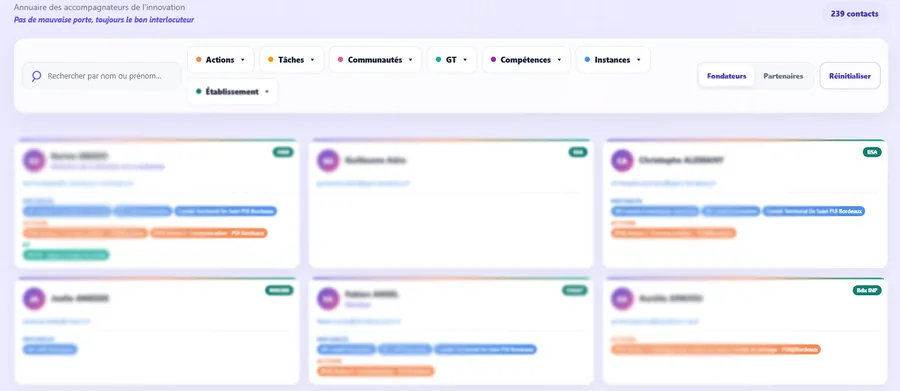
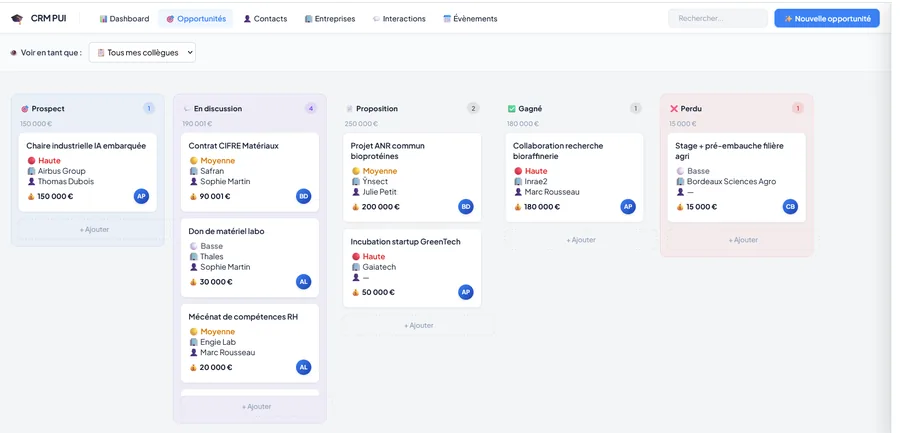
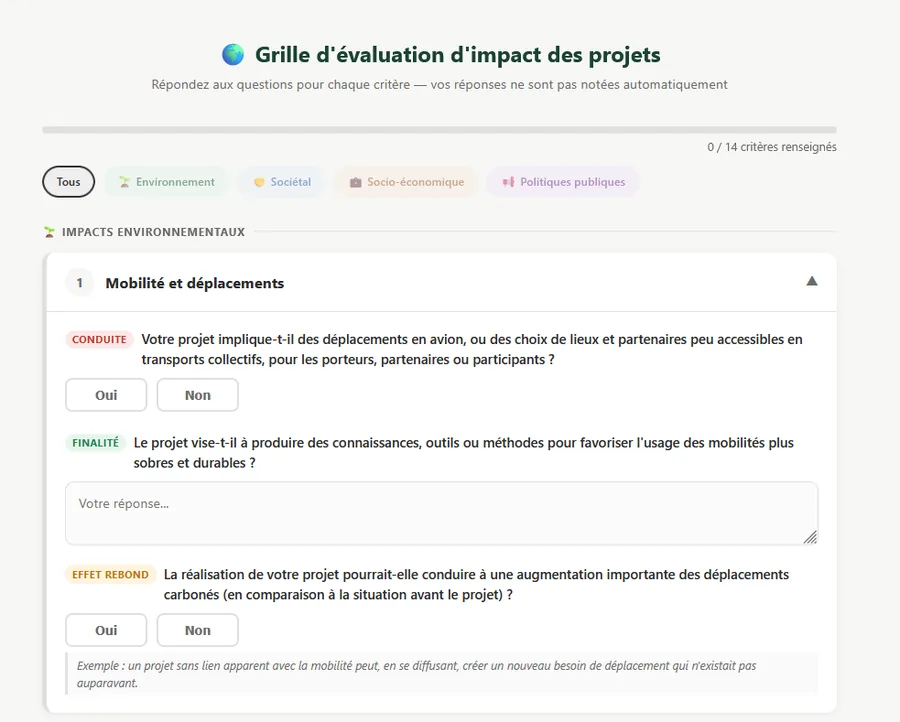
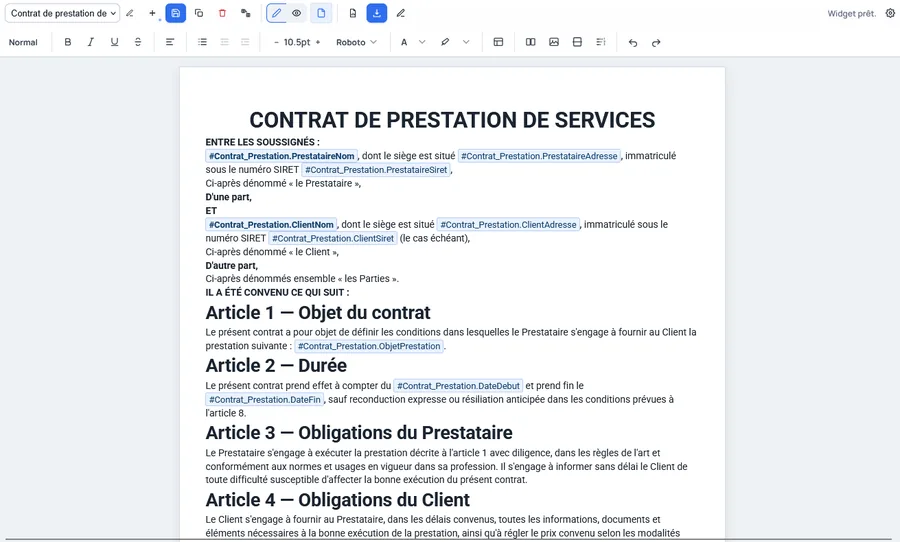
With La Suite numérique — the French government's new digital toolkit — the public sector finally has tools equal to the challenge. But adopting these tools, and structuring data that's often scattered across dozens of spreadsheets, is far from straightforward. We help you carry out this migration and build the business tools that will drive your department's success tomorrow.
Book a callWe support the whole of the public sector — central government, local authorities, public institutions — in structuring their data and building business tools on Grist. Non-profits, businesses and, more broadly, any Grist user will find the same level of support here.
We observe your processes, your organisation and your real pain points.
We organise your data natively in Grist.
Custom interfaces and business tools built close to your actual needs.
Each step stands on its own: bring us in for the whole process, or just for the piece you're missing.
Interfaces built on Grist for early client projects — a concrete look at what good data structuring makes possible.
Grist combines the simplicity of a spreadsheet with the rigour of a relational database, without requiring development skills for day-to-day use. Tables can be linked to one another, permissions can be set precisely by user or group, and the tool stays accessible from a plain browser, with nothing to install. As open-source software, Grist can be audited, adapted and hosted in France without depending on a single vendor for its long-term future — which is precisely the choice made by the French government through La Suite numérique, whose tools are hosted on infrastructure qualified for sensitive administrative data.
Grist puts these building blocks at your disposal; Grist Factory's role is to assemble them with you, starting from your actual processes rather than a generic template. That's what makes the difference between a tool that's merely available and one your teams actually adopt.
With a solid understanding of the public sector and its constraints — regulatory requirements, territorial organisation, security expectations — Grist Factory follows the momentum building around Grist closely. The tool is steadily becoming a reference within the public sector: instances have been deployed for several years across central government services, as well as through a scheme dedicated to smaller local authorities, and French public administration is today among the project's leading contributors.
No: we start from a blank slate or an existing Grist document, since every project is unique — whether you're on the DINUM instance, a self-hosted instance, or the version offered by Grist Labs.
Grist is free, open-source software that can be self-hosted at no cost. Grist Factory's support (structuring, custom development) is a separate paid service, quoted on request.
Public-sector bodies are our priority.
Yes, it's one of the most common cases: we take your existing Excel files and restructure them natively in Grist, with no data loss.
No. Immersion, structuring and custom development are independent: you can call on all of them, or just the piece you're missing.
We work remotely, across the French-speaking world.
Except in special cases, widgets run inside Grist itself: your data never leaves Grist. Every widget is audited by us before any deployment.
The core of your project stays natively in Grist, on your own instance: your data and its structuring belong to you and remain usable without us. Interfaces are designed with as few dependencies as possible, with no heavy infrastructure to maintain — another Grist developer can pick up where we left off if needed.